Clacton-on-Sea Co-operative Band



© Clacton-on-Sea Co-operative Band 2016
Welcome
The Clacton-on-Sea Co-operative Band
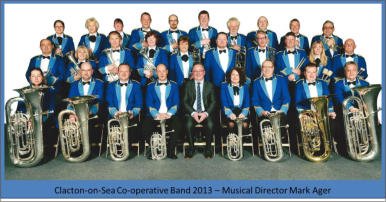
is a traditional Brass Band based in Clacton-on-Sea, Essex, England. Formed in 1948 the Band is a well established organisation and over the years has earned the reputation of being a fine concert and contesting brass band. Although the band no longer competes it still meets regularly to rehearse and plays at concerts in and around the Clacton area. If you play a brass instrument and are interested in playing with the band then please contact the band secretary Ann Headworth. The band rehearse at the rear of the East of England Co-op Supermarket, 53 Frinton Road, Holland Road, Holland-on-Sea, CO15 5UH.
The Bands president
Clacton-on-Sea Co-operative
Band are absolutely delighted
that Andrew Robley has agreed to
be the president of the band. He
has always been a great
supporter of the band and joins
us as often as possible for a
fantastic concert in Clacton.
Check our diary page for details
of his next visit, or check out his
website to discover more about
Andrew.









Welcome
The Clacton-on-Sea Co-
operative Band
is a traditional Brass Band based in Clacton-on- Sea, Essex, England. Formed in 1948 the Band is a well established organisation and over the years has earned the reputation of being a fine concert and contesting brass band. Although the band no longer competes it still meets regularly to rehearse and plays at concerts in and around the Clacton area. If you play a brass instrument and are interested in playing with the band then please contact the band secretary Ann Headworth. The band rehearse at the rear of the East of England Co-op Supermarket, 53 Frinton Road, Holland Road, Holland-on-Sea, CO15 5UH.
The Bands president
Clacton-on-Sea Co-operative Band are absolutely delighted
that Andrew Robley has agreed to be the president of the
band. He has always been a great supporter of the band and
joins us as often as possible for a fantastic concert in
Clacton. Check our diary page for details of his next visit, or
check out his website to discover more about Andrew.


Clacton-on-Sea Co-operative Band


© Clacton-on-Sea Co-operative Band 2016